- 学术动态
报告题目:On the sunny side - polymer-based organic solar cells
报 告 人:慕尼黑工业大学 Peter Müller-Buschbaum 教授
报告时间:2026年10月26日(周一)上午10:00
报告地点:莫干山校区材料楼C306会议室
邀 请 人:高分子材料与工程研究所 陈思 教授
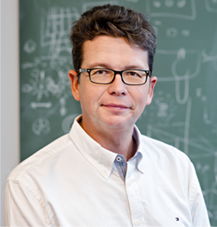
报告人简介:
Professor Peter Müller-Buschbaum studied physics in Kiel, Germany. He then worked as a postdoctoral fellow at the Max Planck Institute for Polymer Research in Mainz and as visiting scientist at the Institut Laue-Langevin and the European Synchrotron Radiation Facility in Grenoble, France. He is full professor at Technical University of Munich heading the Chair of Functional Materials. From 2018 to 2023 he was in addition the scientific director of the Forschungs-Neutronenquelle FRM-II and of the Heinz Maier-Leibnitz Zentrums MLZ in Garching, Germany. Since 2011, he has been the German representative at the European Polymer Federation and, since 2023, he is member of the TUM sustainability board, representing the TUM School of Natural Sciences. Since 2024, he has been Deputy Editor of the journal ACS Applied Materials & Interfaces after more than 10 years of service as Associate and Executive Editor. He heads the Bavarian key laboratory TUM.solar and the Network for Renewable Energies (NRG), and he is Steering Committee Member of the M??bauer Technology Center of the TUM School of Natural Sciences.
(Peter Müller-Buschbaum 教授现任德国慕尼黑工业大学物理系功能材料讲席教授,同时兼任国际权威期刊《ACS Applied Materials & Interfaces》副主编、欧洲聚合物联合会(EPF)德国代表,并领导巴伐利亚州TUM.solar重点实验室及可再生能源网络(NRG)。他长期致力于利用先进的原位X射线与中子散射技术,解析软物质与能源材料的多尺度结构演化)
报告内容摘要:
Polymer-based organic solar cells open up new fields of application compared to conventional silicon-based solar cells, as they are flexible, lightweight, color-adjustable, and potentially very cost-effective. In addition, they also function in low-light conditions and have a high power density, which makes them very attractive for space applications, in addition to their classic terrestrial applications. Since 2025, single-junction organic solar cells have surpassed the magic 20% efficiency rate. Moreover, organic solar cells are also successfully combined with other solar technologies in tandem devices as recently demonstrated with an efficient near-infrared harvesting in perovskite-organic tandem solar cells[1]. Current research questions focus on the aging mechanisms of organic solar cells and the feasibility of converting solar cell production to highly scalable manufacturing methods. The Müller-Buschbaum Group is investigating both issues using advanced X-ray and neutron scattering methods in situ and operando during production[2] and solar cell operation[3]. In addition, the Müller-Buschbaum Group has conducted pioneering work in investigating organic solar cells in space, demonstrating that organic solar cells function equally well in space as they do in the laboratory [4].
[1] Nature 643, 104-110 (2025);
[2] Adv. Energy Mater. 15, 2404724 (2025);
[3] Nano Energy 140, 111043 (2025);
[4] Joule 4, 1880-1892 (2020)
(凭借柔性、轻质、颜色可调及高功率密度等本征优势,聚合物有机太阳能电池突破了传统硅基器件的应用局限,不仅在常规陆基场景中表现优异,更在低光照及航空航天等空间应用中展现出巨大潜力。近年来,单结有机太阳能电池的光电转换效率已突破 20% 大关,并与钙钛矿等前沿技术结合,在叠层器件中实现了高效的近红外光捕获[1]。然而,器件老化机制不明与规模化量产受限仍是制约其进一步发展的核心科学问题与技术瓶颈。针对上述挑战,Müller-Buschbaum 课题组依托先进的原位与工况(in situ/operando)X 射线及中子散射技术,在材料制备[2]与器件运行[3]过程中,实现了对材料微结构演化的实时追踪与深层解析。此外,该课题组在太空光伏领域开展了开创性研究,证实了有机太阳能电池在空间环境下的稳定输出效能,为其在航空航天领域的应用提供了坚实的理论与实验依据[4])
 常用链接
 联系方式